The Neuroscience of Showing Up: The Key to Resilience
You can feel the energy in a classroom when a student realizes that someone is actually showing up for them, not to grade them, not to fix them, but to walk alongside them. For many of our students, that is not a familiar experience.
Some have spent years trying to make it on their own, protecting themselves from disappointment. So when we put them into teams and say, “You’re going to depend on each other,” that can feel foreign, even frightening.
But neuroscience tells us something powerful: our brains are wired for this. And when we finally experience genuine support, it changes us, not just emotionally, but biologically.
When Someone Shows Up for Us
Research shows that social support literally reshapes the brain. People who report feeling supported have stronger connections in areas that manage emotion, learning, and memory, including the prefrontal cortex, hippocampus, and amygdala (Cotton et al., 2020). These are the same regions that help regulate stress and make meaning out of experience.
That means that when students feel supported, when someone checks in, listens, or includes them, their brains begin to shift out of survival mode. They can finally focus, learn, and retain.
For some, that moment of connection may be the first time their nervous system experiences safety in a group. The first time belonging feels possible.
When We Show Up for Others
There is another side to this, the privilege of being the one who shows up. When we extend care to others, our brains light up too. Studies show that giving targeted social support activates our reward and caregiving circuits, the same systems that respond when we feel joy or pride (Inagaki & Ross, 2018).
It is as if the brain says, “This matters.” Helping someone else is not just altruism; it is neurologically reinforcing. That is why students often report that they “get more out of helping others” than being helped themselves. Their brains are wired to find meaning in mutual care.
And when that happens inside a learning team, when students not only receive support but also offer it, you can almost see the chemistry change. The classroom feels different. They are no longer performing for each other; they are showing up with each other.
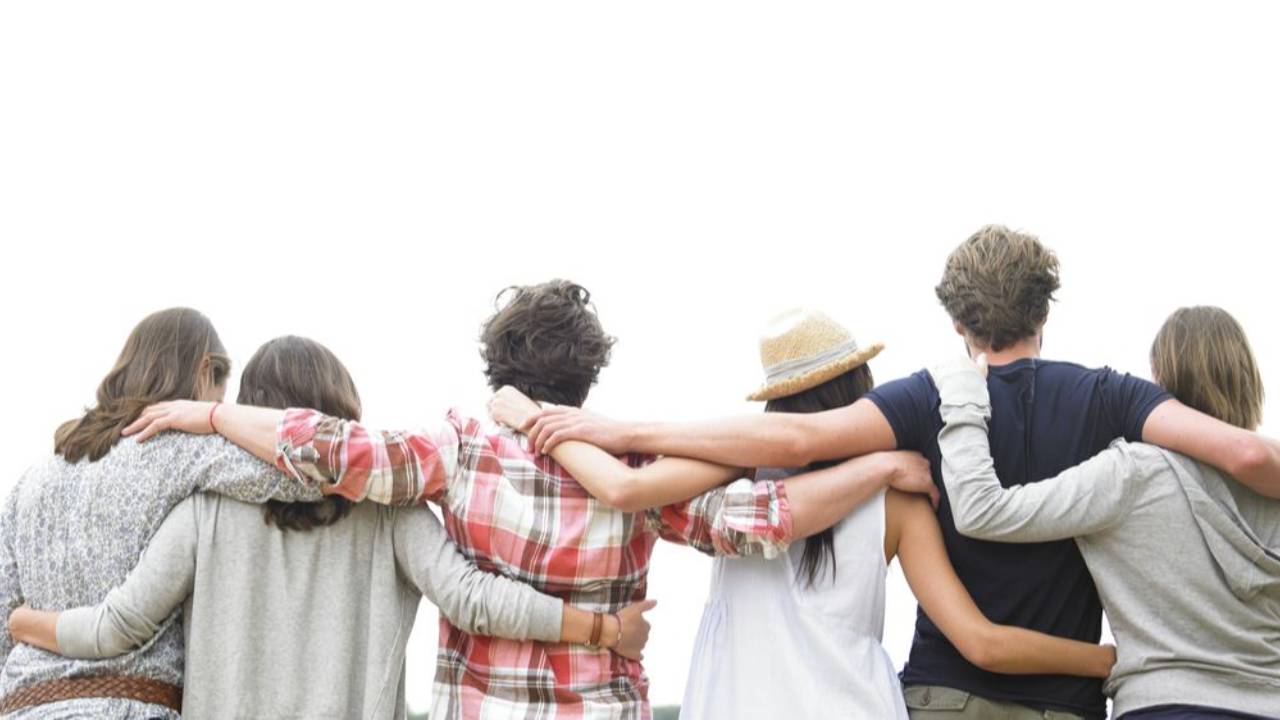
I have had students keep coming to class right up until the very last day, even when they know they will not be moving on with their team or earning the grade they hoped for, simply because they want to show up for the people they have learned alongside. What is even more powerful is what happens next: the team wraps their arms around that student, offering acceptance and support even when things have not gone as planned. From a neuroscience perspective, that is belonging in action. Those moments of mutual care calm the brain’s threat response and strengthen the neural circuits tied to connection and resilience. But on a human level, it is even simpler than that. It is love expressed through loyalty, compassion, and the kind of showing up that reminds everyone in the room they matter, even when the outcome is not perfect.
Connection Creates Resilience
When people work together and engage socially, their brains actually start to synchronize, sharing patterns of attention and emotion that help them coordinate and understand each other (Krendl & Betzel, 2022). It is the neuroscience of “we’re in this together.”
That synchrony builds resilience. When students trust that someone will show up, and that their own presence matters, the brain becomes more flexible, less reactive, and more open to challenge.
For students who have learned to expect disappointment, this kind of reliability can be healing. It retrains the brain to see connection not as a threat, but as a source of stability.
Why This Matters in Team-Based Learning
Team-based learning is not just an instructional strategy; it is a social experiment in accountability, empathy, and trust. It asks students to take risks, to rely on others, and to become reliable themselves.
For some, it is the first time they have been part of a system that does not give up on them. And for educators, it is the daily reminder that showing up consistently, even when teams do not click right away, is one of the most powerful forms of teaching we have. When it comes to self-preservation as educators, this is something that AI will never be able to replicate.
Because when we show up, we help our students rebuild something far deeper than skill: we help them rebuild belief in themselves, in others, and in the idea that learning happens best together.
Maybe the most powerful thing we can do in our classrooms is help students remember what it feels like when someone truly shows up, or imagine it for the first time. Perhaps when introducing them to collaborative learning, give them space to write about those moments. When we do this, we invite empathy and belonging to grow. And if no one has ever shown up for them, that reflection can become a promise: I can be that person for someone else.
References (APA)
Cotton, K., Verghese, J., & Blumen, H. M. (2020). Gray matter volume covariance networks, social support, and cognition in older adults. The Journals of Gerontology: Series B, 75(6), 1219–1229. https://doi.org/10.1093/geronb/gbz056
Inagaki, T. K., & Ross, L. P. (2018). Neural correlates of giving social support: Differences between giving targeted versus untargeted support. Social Cognitive and Affective Neuroscience, 13(5), 507–516. https://doi.org/10.1093/scan/nsy026
Krendl, A. C., & Betzel, R. F. (2022). Social cognitive network neuroscience. Social Cognitive and Affective Neuroscience, 17(5), 510–529. https://doi.org/10.1093/scan/nsac022
Webb, E. K., Ely, T. D., Rowland, G. E., et al. (2023). Neighborhood disadvantage and neural correlates of threat and reward processing in survivors of recent trauma. JAMA Network Open, 6(9), e2334483. https://doi.org/10.1001/jamanetworkopen.2023.34483